ATLAS presents its new prototype: Calypso

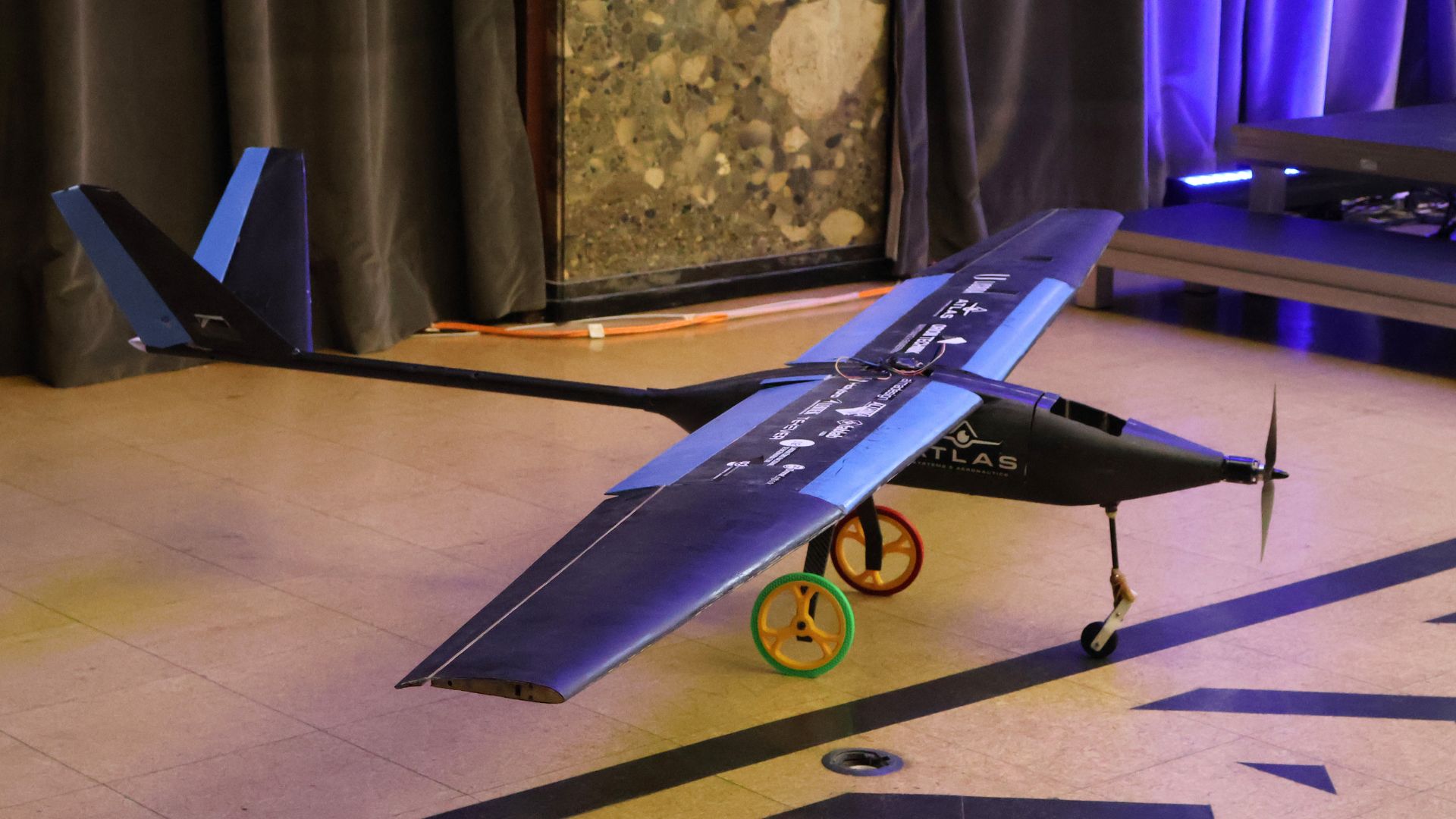
On June 12, ATLAS – Systems & Aeronautics, a student group integrated within the Aerospace Engineering Students’ Association (AeroTéc), unveiled its latest prototype, Calypso: a radio-controlled aircraft that will compete in the Air Cargo Challenge, taking place from June 30 to July 3 in Stuttgart, Germany. This year’s challenge focuses on transporting soft drink cans—the aircraft capable of carrying the highest number of cans will achieve the best score. Calypso is capable of reaching speeds of up to 97.2 km/h and can simultaneously carry 11 cans of 0.33 litres in a controlled manner. Additional points will be awarded based on the level of control demonstrated during take-off and landing. ATLAS currently combines the integration of electronic systems, powertrain technologies, telecommunications, video processing, data acquisition and analysis, as well as mission planning and control.
In the field of electronics, the team developed, for the first time, a printed circuit board responsible for antenna tracking, with the goal of reducing dependence on industry-supplied electronic components. Regarding the power system, Calypso incorporates a new battery capable of supporting 25 kW. The group also developed a 3D model and improved its Wi-Fi and 4G transmission systems to optimize long-range video transmission capabilities.
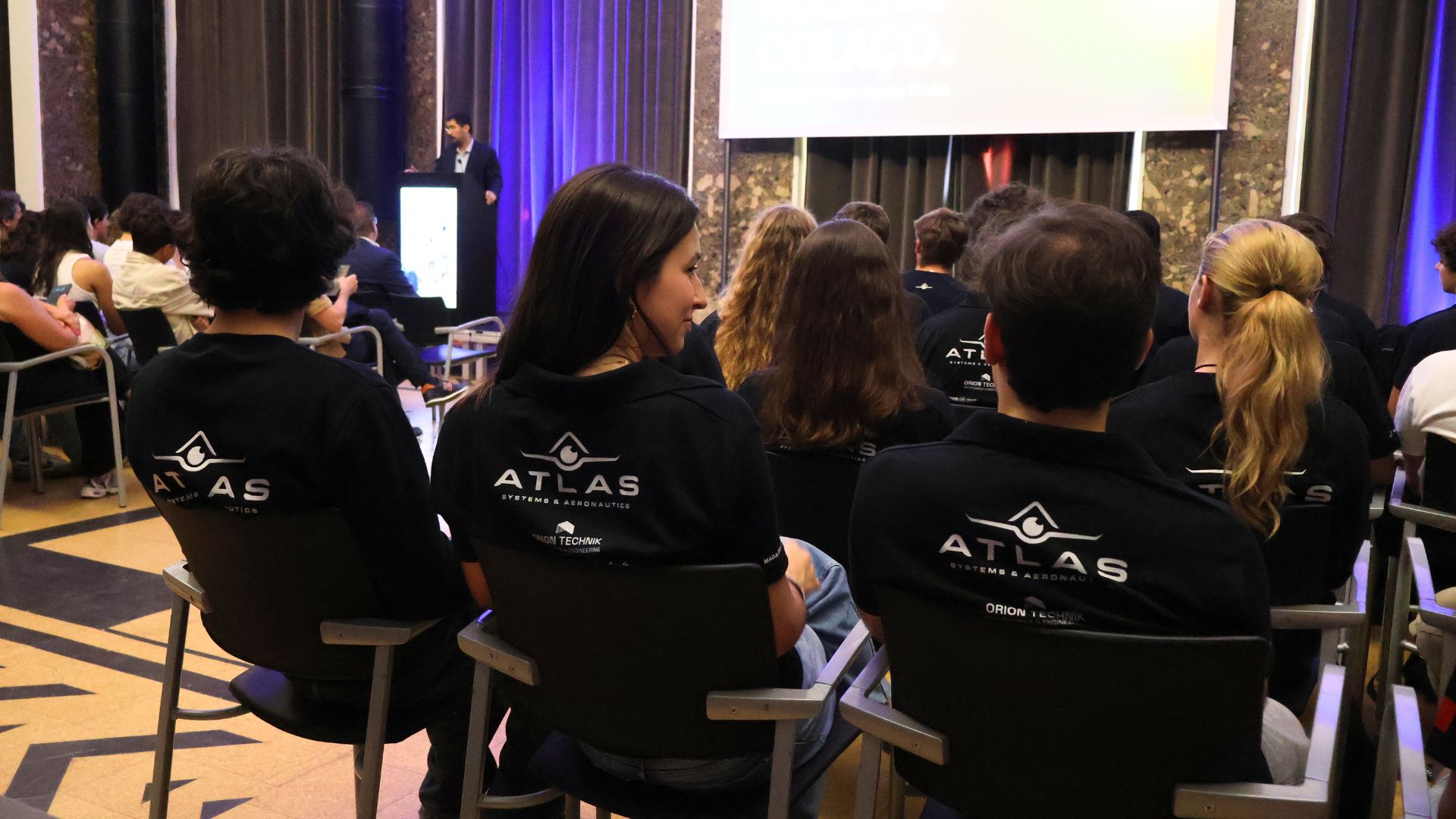
The event began with remarks from Filipa Fernandes, the team leader, who started by thanking all team members, friends, and family for their support. She then invited Rogério Colaço, President of Técnico, to share a few words. “At this moment, one of the aspects that most clearly distinguishes Técnico from national and international schools and institutions in science and technology is the vitality of its student groups and, in particular, its prototype development teams,” he highlighted, emphasizing that the wide range of extracurricular activities available contributes significantly to students’ educational journeys. “They have the opportunity to practice engineering while they are learning it,” he added.
Afonso Vale, a former member of the ATLAS leadership team, shared some of his experience within the group, from the creation of the first prototype through to 2024. The alumnus recalled several of the team’s challenges and achievements, from completing the first flight during a military exercise to continuously improving systems and infrastructure. He also challenged current members to continue progressing and developing prototypes capable of flying ever higher: “Keep building great aircraft, keep representing Técnico’s good name, keep innovating, and above all, keep challenging yourselves. Never forget that.”
During the 2024/25 academic year, the group underwent several changes, from relocating its facilities to defining new objectives. The students decided to strengthen their connection with society through a new mission: developing a prototype system consisting of an aircraft (Prometheus) and a drone (Icarus) designed for forest monitoring and search-and-rescue operations in wildfire scenarios. For this reason, Prometheus integrates computer vision and artificial intelligence systems. When a person in danger is detected, the aircraft deploys the drone, Icarus, which approaches the location and attempts to establish contact with the relevant emergency services.
Throughout the rollout, the group highlighted the team spirit that emerged not only through the development of the various system components but also during the most challenging moments.
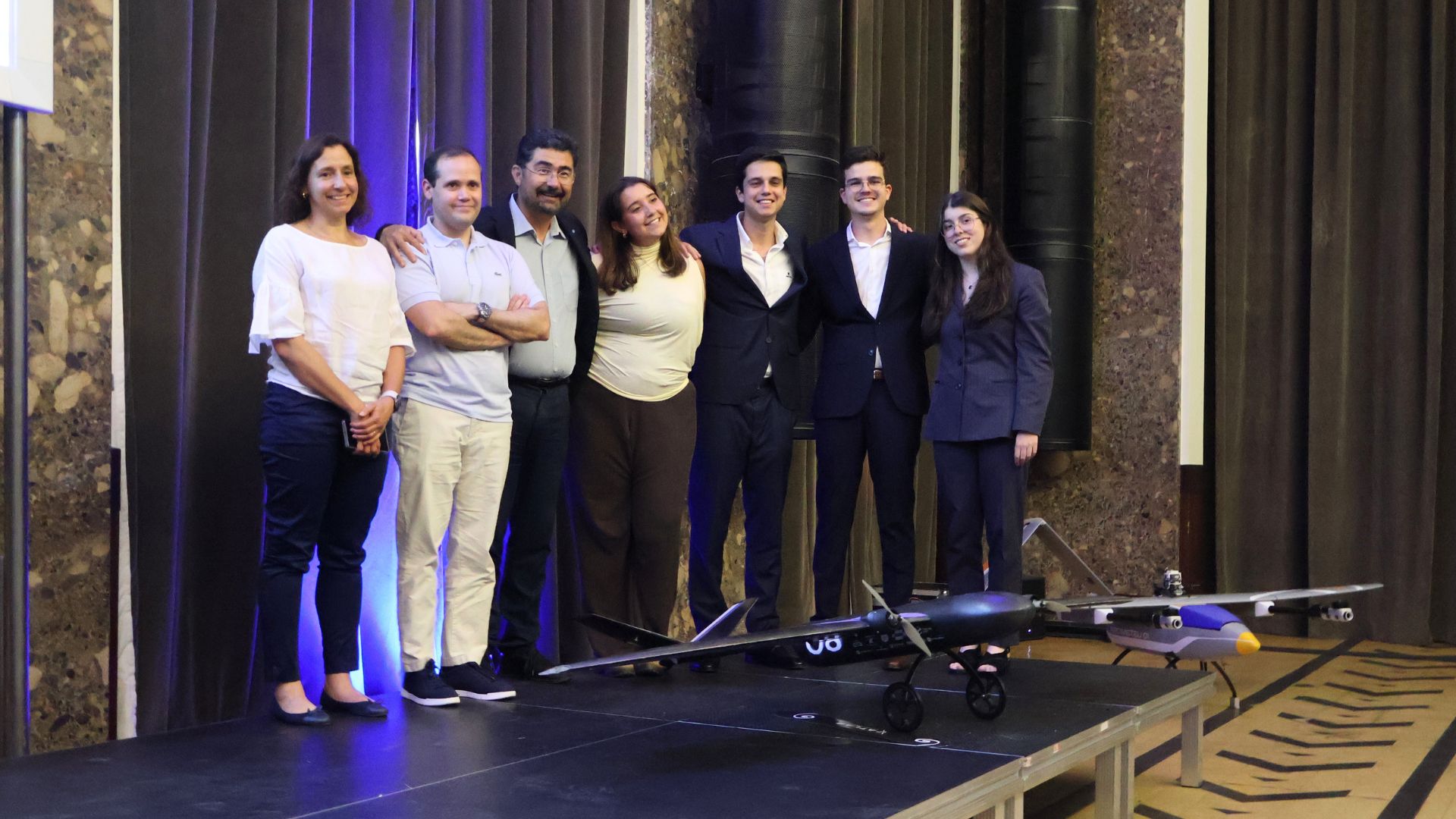
The event concluded with all team members being invited onto the stage and the unveiling of the new prototype.
📷 See the full photogallery here.